The Fundamental Principles of Architecture: Proportion, Rhythm, and Balance in Buildings

The Fundamental Principles of Architecture: Proportion, Rhythm, and Balance in Buildings
Architecture is not only about creating structures that serve a purpose—it is about shaping spaces that feel right. Behind every successful building lies an understanding of a few timeless principles that have guided architects for centuries: proportion, rhythm, and balance. These are not just aesthetic ideals; they are tools that influence how we experience and interact with the built environment every day.
Proportion – The Relationship Between the Parts
Proportion refers to the relationship between the different elements of a building and the whole. It can describe the ratio between height and width, the size of windows compared to the façade, or the relationship between ceiling height and furniture scale. When proportions are well considered, a building feels harmonious and natural.
From ancient times, architects have used proportion as a way to express beauty and order. The Parthenon in Athens is a classic example—every column, spacing, and angle was carefully calculated according to mathematical principles. During the Renaissance, architects such as Leon Battista Alberti and Andrea Palladio expanded on this idea, believing that a building’s proportions should reflect the human body’s measurements and rhythm—a reminder that architecture and humanity are deeply connected.
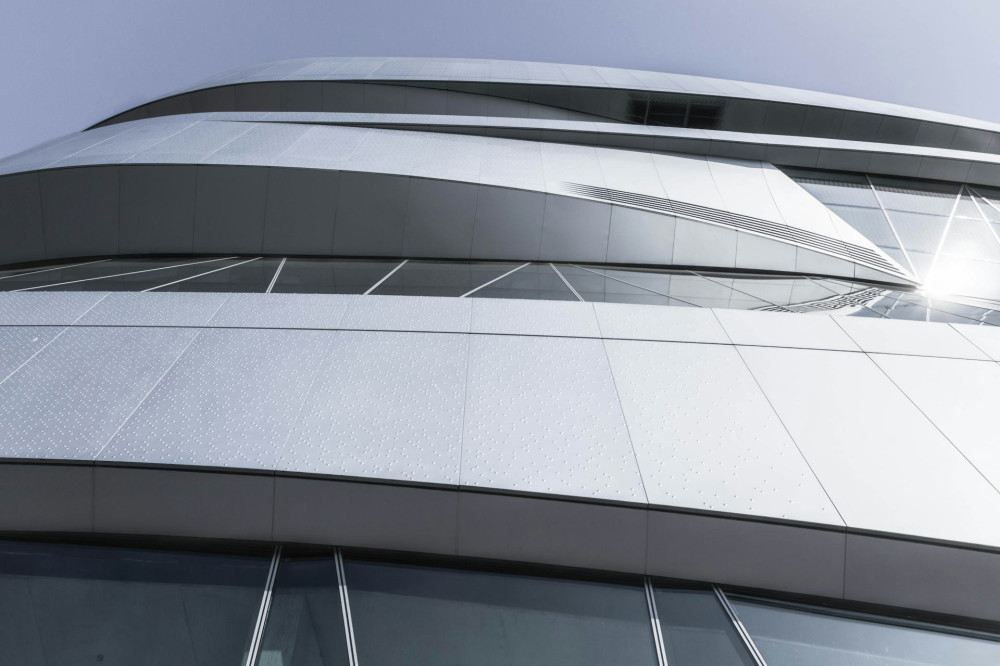
In modern design, proportion remains a key tool for achieving harmony, even when materials and forms are more experimental. A glass office tower, for instance, can feel cold and impersonal if the windows are too large in relation to the façade. But with the right proportions, even minimalist architecture can feel warm, balanced, and human.
Læs også:

Rhythm – Repetition and Variation
Rhythm in architecture emerges through the repetition of forms, lines, and patterns. It might appear in the spacing of windows, the alignment of columns, or the pattern of rooflines. Rhythm creates visual order that the eye can follow, giving a building a sense of movement and life.
Rhythm can be regular—like a row of evenly spaced windows on a traditional building—or more dynamic, as seen in contemporary architecture where variation adds energy and interest. The key is that rhythm supports the building’s function and character.
In the urban landscape, rhythm plays a crucial role in how we perceive coherence between buildings. A street where façades share a consistent rhythm in height and window placement feels calm and unified. When that rhythm is broken too abruptly, it can create visual tension—but a deliberate variation can also add identity and vibrancy to a neighborhood.
Balance – When the Whole Feels Right
Balance concerns how a building’s elements are distributed visually and spatially. A structure can be symmetrical, with both sides mirroring each other, or asymmetrical, where equilibrium is achieved through contrast and weight. What matters most is that the whole feels stable and natural.
Symmetry has long been associated with classical beauty and order. Many historic buildings—from courthouses to university halls—are organized around a central axis that conveys clarity and calm. In modern architecture, asymmetry is often used to create dynamism and movement, but balance remains essential. A bold or unconventional design can feel exciting if it is thoughtfully composed—but confusing if it lacks internal coherence.
Balance is not only about form; it also involves materials, colors, and light. A heavy concrete wall can be balanced by transparent glass panels, and a dark interior can find equilibrium through natural light. The architect’s task is to find that point where a building feels neither too heavy nor too light, neither too static nor too chaotic.
The Interplay of Principles
Proportion, rhythm, and balance rarely operate in isolation. They interact and together shape the way we experience architecture. A well-proportioned façade can reinforce a rhythmic pattern of windows, while the balance between materials and light completes the composition.
When these principles are applied consciously, even a simple building can appear as a cohesive work of art. It is not necessarily the most expensive materials or the most complex forms that make great architecture—but the ability to create harmony among the parts.
Architecture as Experience
Ultimately, architecture is about more than technique or aesthetics. It is about how people experience space—how we move through it, how it makes us feel, and how it shapes our daily lives. When proportion, rhythm, and balance come together, a building feels “right.” That is the moment when architecture transcends function and becomes art—an integral part of our environment that we may not always notice, but that we always sense when it is missing.
Læs også: